
Hospitals have always needed solid technology, but recent years have forced the entire medical field into a digital revolution. Healthcare IT Solutions aren’t just nice to have anymore, they run the core operations that keep hospitals functioning, diagnosing conditions, treating patients, and organizing care.
Everything from digital health records to smart analytics and home-monitoring tools is changing what it means to be efficient and accurate in the growing medical world. People expect services that are safer, quicker, and better connected, so IT services for healthcare are filling the gaps that old-school systems just can’t handle.
About Healthcare IT Solutions
Healthcare IT Solutions refer to the technology tools, online applications, and programs designed to simplify clinical practice, streamline patient data, make hospital operations smoother, and assist doctors in making wiser decisions. You’ll find everything here: EHR and EMR systems, online doctor visits, cloud storage, automation software, mobile applications, and protected data frameworks.
When healthcare providers work with the right tech partner, they reduce paperwork, eliminate disconnected information, strengthen security, and create a smoother experience for patients and hospital workers alike.
How Healthcare IT Solutions Are Transforming the Healthcare Industry
The medical field is moving toward smarter systems that work together better. Here’s what technology is doing to push that forward.
1. Digital Patient Records and Data Integration
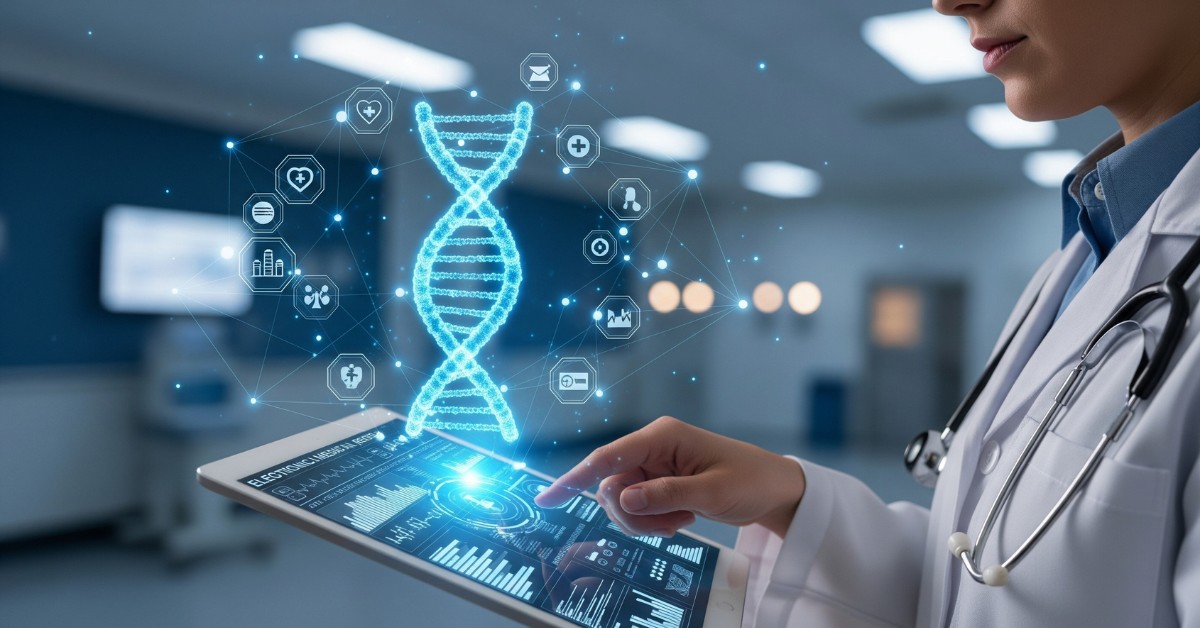
Paper charts and haphazard files are no longer used in hospitals. Digitized EMR and EHR systems consolidate patient histories, test results, medication orders, and notes into a single, secure system. This eliminates repetition, improves the accuracy of information and allows all departments to view the updated information. Good integration also lightens the load on admin staff and maintains consistent care from one visit to the next.
2. Remote Care, Telemedicine and Mobile Health
Millions of people have now been exposed to healthcare through online doctor appointments. Telemedicine platforms allow patients to communicate with doctors at any time they need, eliminating unnecessary hospital visits.
Mobile applications enable individuals to make appointments, receive online prescriptions, receive reminders, and monitor their health at home. This eases the burden and continues care, particularly for individuals living with long-term conditions.
3. Data Security, Compliance and Risk Management
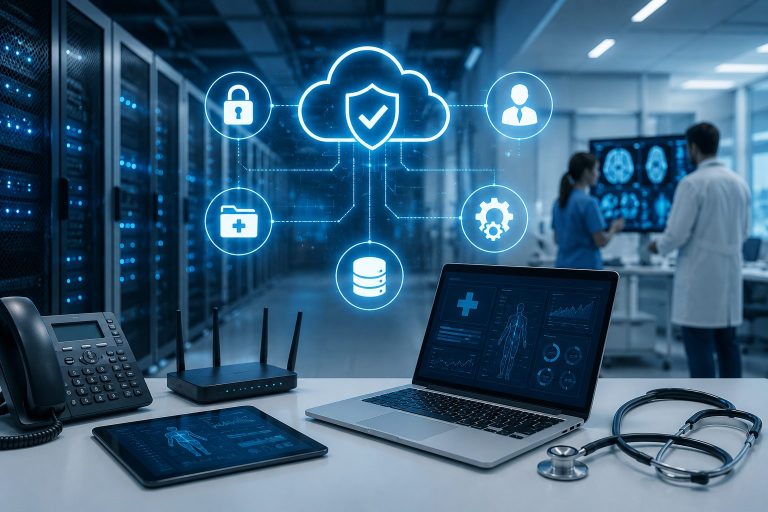
Medical information is highly sensitive and, therefore, its security is extremely important. Recent IT solutions in health care include secure cloud applications, encrypted data, job-based access controls, and adherence to health laws.
The automatic backups and monitoring software reduce the risk of data leakage and maintain patient data security in all devices and hospital departments.
4. Automation and Workflow Optimization
Hospital tasks are simplified with automation software billing, setting up appointments, processing labs, and supply management are operated more easily.
This reduces errors, time waste, and tedious clerical tasks for personnel. All things operate smoothly, hospitals serve patients more quickly, reduce waiting time, and make people happier with their services.
5. AI, Analytics and Better Decision-Making
Hospitals will be provided with AI-based analytics to support superior decision-making. Problem detection prediction models allow identifying problems at an early stage, assist doctors in determining what is wrong, and manage resources more efficiently.
Regardless of whether it is reading medical images or estimating the number of patients flowing in, advanced analytics help guide planning and ensure hospitals are efficient, fast to react, and prepared to handle the next task.
Why IT Services for Healthcare Are Becoming Essential
Hospitals today face more patients, greater pressure to perform, and a demand for stronger digital tools. Old systems can’t keep up with the size or speed needed now. IT services fix these problems by:
- Bringing all hospital processes together in one digital system
- Making diagnosis and record-keeping more accurate
- Building clearer communication between teams
- Allowing quicker choices with live data
- Cutting costs by automating routine work
Technology is not replacing care; it is enhancing care. With the right tools, hospitals achieve improved outcomes, less stressful work, and greater patient trust.
Conclusion
Healthcare is changing, and technology drives every step forward. Digital records, automation, strong security, analytics, and remote care are all part of how Healthcare IT Solutions help hospitals deliver safer, faster, and more connected patient experiences.
If you want to upgrade your healthcare operations with advanced, customised, and secure digital systems, Harjai Technologies delivers comprehensive IT services for healthcare, software development, cloud solutions, automation, mobile apps, and enterprise integrations, all designed around how you work. Explore how Harjai Technologies can upgrade your healthcare systems today at harjaitechnologies.com.