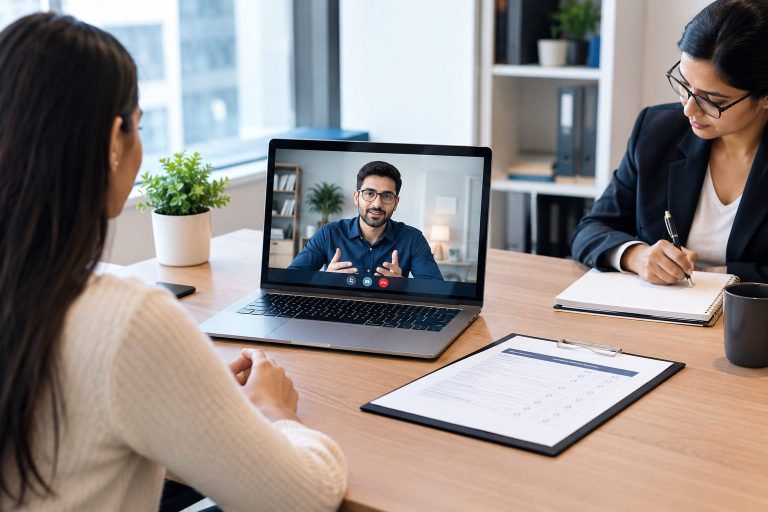


Hiring has evolved rapidly, and remote interviews are now a standard part of modern recruitment. When done well, they save time, reduce hiring costs, and expand access to global talent. But when handled poorly, they can lead to miscommunication, bias, and missed opportunities.
This guide will walk you through a practical, step-by-step process to conduct effective remote interviews that are structured, fair, and results-driven.
Why Remote Interviews Matter
Remote interviews offer clear advantages:
- Access to a broader talent pool
- Faster scheduling and shorter hiring cycles
- Lower logistical costs
- Improved flexibility for both employers and candidates
Research from multiple HR industry reports consistently shows that structured interviews improve hiring accuracy compared to unstructured conversations. Remote interviews, when properly structured, can be just as reliable as in-person interviews.
Prepare Before the Interview
Preparation is where most remote interviews succeed or fail.
Define the Role Clearly
Before scheduling interviews:
- Finalize key responsibilities
- Identify required skills (technical and soft skills)
- Align on evaluation criteria with stakeholders
Create a standardized scorecard so every candidate is assessed fairly.
Choose the Right Technology
Select a reliable platform that supports:
- Stable video quality
- Screen sharing
- Recording (if compliant with privacy policies)
- Structured evaluation tools
Many organizations streamline this process using a remote interview service that centralizes scheduling, video interviewing, and candidate evaluation.
Test Everything in Advance
- Check audio and video quality
- Confirm internet stability
- Review interview questions
- Share meeting details clearly
A quick technical rehearsal prevents awkward disruptions.
Structure the Interview Properly
A structured format reduces bias and increases hiring accuracy.
Use the Same Core Questions
Ask all candidates:
- The same competency-based questions
- Role-specific technical questions
- Behavioral questions based on real scenarios
Example behavioral prompt:
“Tell me about a time you handled a difficult stakeholder remotely. What was the outcome?”
This helps compare candidates objectively.
Keep a Clear Agenda
A simple structure works best:
- Introduction (5 minutes)
- Candidate background discussion (10–15 minutes)
- Skills and competency questions (20–30 minutes)
- Candidate questions (10 minutes)
- Closing and next steps (5 minutes)
Predictability reduces anxiety and improves candidate performance.
Create a Professional Virtual Experience
Remote interviews require intentional communication.
Build Rapport Early
Start with a brief personal connection:
- Thank them for their time
- Acknowledge the remote format
- Offer a quick overview of the session
Tone and body language matter even more on camera.
Maintain Engagement
- Keep eye contact by looking at the camera
- Avoid multitasking
- Use active listening cues
- Minimize background distractions
Candidates often judge company culture based on the interviewer’s professionalism.
Evaluate Objectively
Avoid making decisions based on “gut feeling.”
Use a Scoring System
Rate candidates on:
- Technical competence
- Communication clarity
- Problem-solving ability
- Cultural alignment
- Adaptability to remote collaboration
Take notes during or immediately after the interview.
Avoid Common Biases
Be mindful of:
- Favoring candidates with better home setups
- Overvaluing confidence over competence
- Letting small technical issues influence perception
Focus on skills and outcomes, not presentation quality.
Follow Up Promptly
The post-interview process is equally important.
- Send a confirmation email outlining next steps
- Provide timelines for feedback
- Communicate clearly if there are delays
A fast and transparent process improves candidate experience and strengthens employer reputation.
Common Mistakes to Avoid
- Unstructured, casual conversations
- Overloading candidates with too many interview rounds
- Ignoring technical checks
- Failing to train interviewers
- Delayed feedback
Remote hiring is efficient only when supported by clear systems and trained interviewers.
Best Practices for Long-Term Success
If you conduct frequent remote interviews:
- Train hiring managers in structured interviewing
- Regularly review interview questions for relevance
- Analyze hiring outcomes to refine evaluation criteria
- Collect candidate feedback
Continuous improvement ensures your remote hiring process remains competitive and fair.
Conclusion
Successful remote interviews are not about technology alone—they are about preparation, structure, and consistency.
When you:
- Define clear evaluation criteria
- Use structured questions
- Create a professional virtual experience
- Score candidates objectively
- Communicate transparently
You significantly increase your chances of selecting the right candidate.
Remote interviews are here to stay. The organizations that treat them as a strategic hiring process—not just a virtual meeting—consistently make better hiring decisions.