
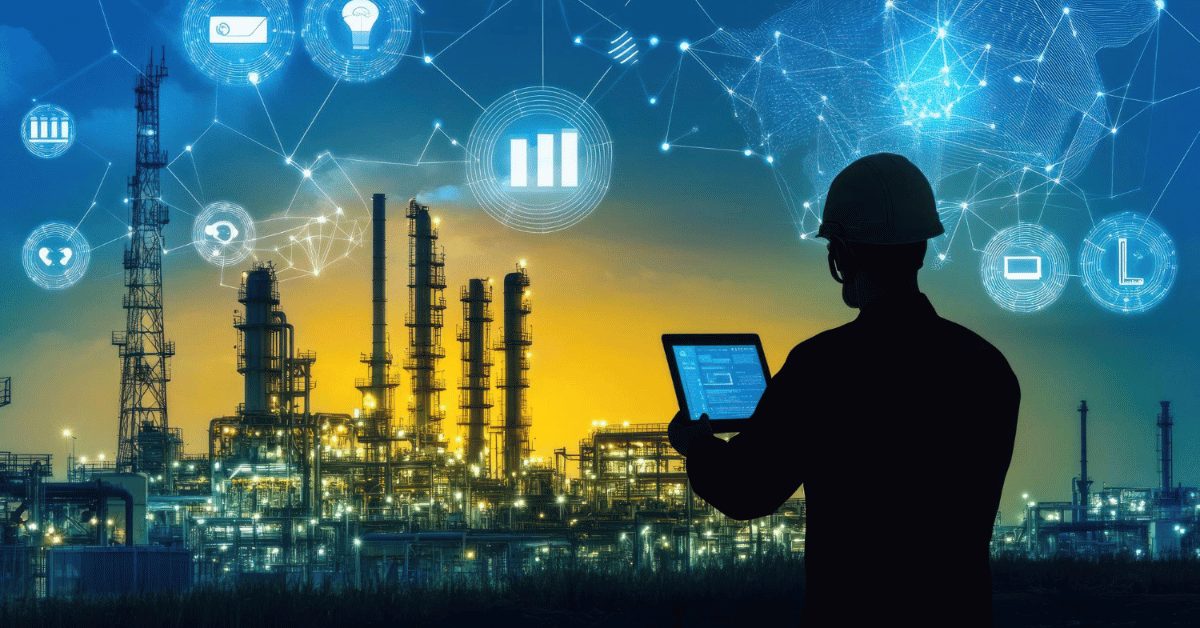

What is digital transformation in oil and gas is no longer a topic for meetings and presentations. It is a real business need. Oil price swings, ageing equipment, and strict regulations push oil and gas companies to operate more smartly and safely. Every decision now needs speed, accuracy, and control.
Industry data shows that companies using digital systems across operations increase output efficiency by more than 20% while reducing downtime and safety issues.
This is where digital transformation in oil and gas plays a clear role. It is not a trendy phrase. It is a strategic step towards data-driven work, automation and interdependent operations across the complete value chain.
About Digital Transformation in the Oil and Gas Industry
Digital transformation of the oil and gas industry means integrating digital technologies into upstream, midstream, and downstream operations to enhance decision-making, asset health, safety, and daily operations. This includes data analysis tools, cloud systems, automation, and enterprise platforms that link scattered processes.
This is different from fundamental IT changes. The focus stays on matching technology with core operations. It includes exploration, production, refining, transport and compliance. The aim is to respond more swiftly to market and operational changes without wasting time or making guesses.
How Digital Transformation Is Reshaping the Oil and Gas Sector
Digital activities in oil and gas only provide results when they address practical issues on the ground. Below are the main areas where digital transformation creates direct and measurable impact, especially when companies use structured enterprise solutions.
1. Data-Driven Exploration and Production Optimization
Surveys, drilling tools and production systems of oil and gas sites produce vast volumes of data. Digital transformation consolidates this data into a single location where teams can analyse it clearly.
With real-time dashboards and predictive models, operators improve drilling precision, balance output levels, and reduce wasted time. This move from reaction-based work to prediction-led planning defines the modern digital oilfield.
2. Asset Performance and Predictive Maintenance
Unplanned equipment failures are costly to the industry. Digital transformation helps firms shift from fixed schedules to condition-based maintenance.
Teams track equipment condition, identify early fault indicators, and schedule repairs before they occur using related sensors and analytics. This extends asset lifespans, reduces downtime, and enhances safety at plants and sites.
3. Integrated Enterprise Systems for Operational Efficiency
Disconnected systems slow down oil and gas operations. IT solutions for oil and gas industry by Harjai Technologies address this issue by integrating ERP, supply chain, finance, and field operations into a single system.
Enterprise platforms give live views of purchasing, stock levels, project spending, and production output. Companies working with experienced digital partners like Harjai Technologies usually focus on building scalable, connected systems rather than stand-alone tools.
4. Cloud and Scalable Infrastructure for Agility
Old on-site systems limit growth and raise costs. Cloud adoption enables oil and gas companies to scale systems as needed while keeping data accessible.
Cloud platforms support analytics, remote work, and secure data access across locations. This matters most to global companies managing many assets, partners, and compliance rules simultaneously.
5. Enhanced Safety, Compliance, and Risk Management
Safety and compliance are strict requirements in the oil and gas industry. Digital transformation enables automated reporting, real-time safety tracking, and compliance checks across operations.
By digitising safety tasks and audits, companies reduce manual mistakes, meet regulations, and react faster to incidents. Data analysis also highlights risk patterns early, helping prevent accidents and fines.
Role of Digital Strategy and Implementation Expertise
Technology alone does not create change. Clear planning and strong execution drive fundamental transformation. Successful programs need industry knowledge, clear roadmaps, and alignment between business goals and technology.
From updating enterprise systems to building data platforms and cloud setups, oil and gas companies depend on partners who understand both operations and digital design. The aim is to build long-term digital strength that grows with business demands.
Conclusion
Digital transformation in oil and gas is no longer a choice. It serves as the foundation for cost control, safety improvement, stable operations, and future growth. From data-led production to connected enterprise systems and flexible cloud platforms, digital tools now shape how energy companies run and expand.
Harjai Technologies supports oil and gas companies through structured digital transformation initiatives focused on enterprise integration, data analytics, cloud solutions, and process upgrades.
With strong experience integrating technology into real-world operations, Harjai helps energy companies shift from disconnected systems to innovative IT solutions for the oil and gas industry, creating connected digital environments.
