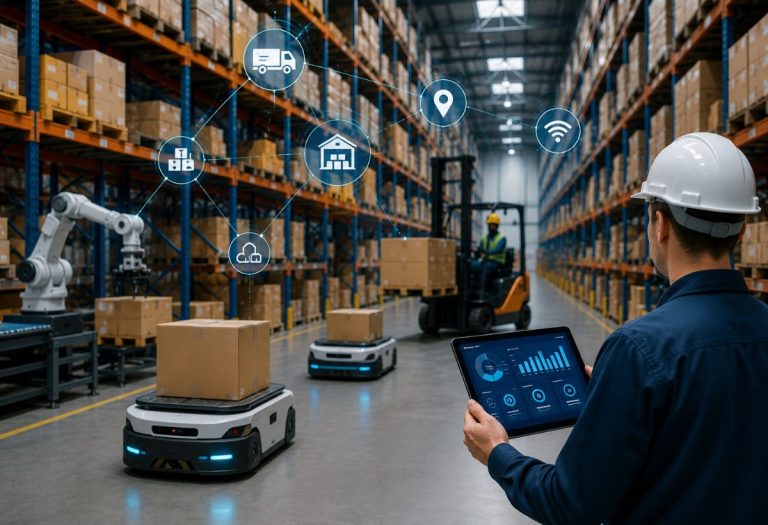


The logistics industry is under constant pressure to deliver faster, reduce costs, and maintain complete visibility across complex supply chains. Manual processes, siloed systems, and limited real-time data make it difficult to compete in today’s fast-moving environment. This is where digital transformation in logistics becomes critical.
Digital transformation is not just about adopting new software. It is about redesigning operations, improving data flow, and creating a connected ecosystem that enhances efficiency, accuracy, and customer experience.
What Is Digital Transformation in Logistics?
Digital transformation in logistics refers to integrating advanced technologies into transportation, warehousing, inventory management, and supply chain operations to improve performance and decision-making.
From automated warehouses to predictive analytics, logistics companies are using technology to:
- Improve shipment visibility
- Reduce operational errors
- Optimize routes and fuel usage
- Enhance customer communication
- Strengthen supply chain resilience
Industry reports consistently show that companies investing in digital supply chain tools experience higher efficiency, lower costs, and better service levels compared to those relying on traditional systems.
Key Benefits of Digital Transformation in Logistics
Real-Time Visibility Across the Supply Chain
With IoT sensors, GPS tracking, and cloud-based dashboards, logistics teams can monitor shipments, warehouse stock, and vehicle performance in real time.
Benefits include:
- Faster issue resolution
- Improved delivery accuracy
- Better coordination between teams
- Higher customer satisfaction
Real-time data reduces uncertainty and enables proactive decision-making.
Improved Operational Efficiency
Automation reduces repetitive manual tasks such as data entry, invoice processing, and inventory updates.
Examples:
- Automated warehouse picking systems
- Digital proof of delivery (ePOD)
- AI-powered route optimization
These improvements reduce human errors and speed up operations without increasing labor costs.
Data-Driven Decision Making
Modern logistics systems generate large volumes of operational data. When analyzed correctly, this data helps businesses:
- Forecast demand more accurately
- Optimize fleet utilization
- Reduce fuel consumption
- Identify supply chain bottlenecks
Advanced analytics and AI models allow logistics managers to move from reactive to predictive operations.
Enhanced Customer Experience
Customers today expect accurate delivery timelines and real-time tracking.
Digital systems enable:
- Automated notifications
- Transparent order tracking
- Faster query resolution
- Seamless communication
Improved visibility builds trust and strengthens long-term business relationships.
Key Technologies Driving Digital Transformation in Logistics
Artificial Intelligence (AI) and Machine Learning
AI is transforming logistics by enabling predictive maintenance, intelligent route planning, and demand forecasting.
For example:
- Predicting vehicle breakdowns before they happen
- Adjusting routes based on traffic conditions
- Forecasting seasonal demand spikes
These tools help companies reduce downtime and improve reliability.
Internet of Things (IoT)
IoT devices collect real-time data from vehicles, containers, and warehouses.
Common applications include:
- Temperature monitoring for sensitive goods
- Fleet tracking
- Smart inventory management
IoT improves asset utilization and reduces loss or damage.
Cloud Computing
Cloud platforms allow logistics companies to centralize data and connect multiple stakeholders.
Benefits:
- Scalability
- Secure data storage
- Real-time collaboration
- Faster system updates
Cloud infrastructure supports modern it solutions for logistics by enabling seamless integration between transportation management systems (TMS), warehouse management systems (WMS), and ERP platforms.
Automation and Robotics
Automated guided vehicles (AGVs), robotic picking systems, and conveyor automation reduce labor dependency and improve warehouse speed.
These technologies:
- Increase picking accuracy
- Reduce processing time
- Lower operational costs
Automation is especially valuable for high-volume distribution centers.
Blockchain Technology
Blockchain enhances transparency and security in supply chain transactions.
It helps:
- Prevent fraud
- Improve document verification
- Increase trust between supply chain partners
Though still evolving, blockchain offers promising applications in logistics compliance and documentation.
Challenges to Consider Before Implementation
Digital transformation requires careful planning. Common challenges include:
- High initial investment
- Resistance to change
- Data security concerns
- Integration with legacy systems
To overcome these challenges, organizations should:
- Conduct a digital readiness assessment
- Prioritize high-impact areas first
- Train employees properly
- Choose scalable and secure platforms
A phased approach often delivers better long-term results than attempting a complete overhaul at once.
How to Start Your Digital Transformation Journey
If you’re considering digital transformation in logistics, begin with these steps:
- Audit current processes and identify inefficiencies.
- Define measurable goals (cost reduction, faster delivery, improved visibility).
- Select technologies aligned with your business size and growth plans.
- Partner with experienced technology providers.
- Track KPIs and continuously optimize systems.
Digital transformation is not a one-time project. It is an ongoing process of improvement.
Conclusion
Digital transformation in logistics improves visibility, efficiency, and customer satisfaction while strengthening supply chain resilience. By leveraging AI, IoT, cloud platforms, automation, and data analytics, logistics companies can move from manual operations to intelligent, connected systems.
The key is to start strategically, invest wisely, and focus on long-term operational value rather than short-term trends. With the right technologies and implementation approach, logistics businesses can build faster, smarter, and more competitive supply chains.